Fit-to-size box machine and box height reduction
Makes a box to each order's size, or cuts a standard box down and closes it, cutting void fill and freight; also a way to reduce empty space under the EU packaging regulation.
Makes a box to each order's size, or cuts a standard box down and closes it, cutting void fill and freight; also a way to reduce empty space under the EU packaging regulation.
Makes a box to each order's size, or cuts a standard box down and closes it, cutting void fill and freight; also a way to reduce empty space under the EU packaging regulation.
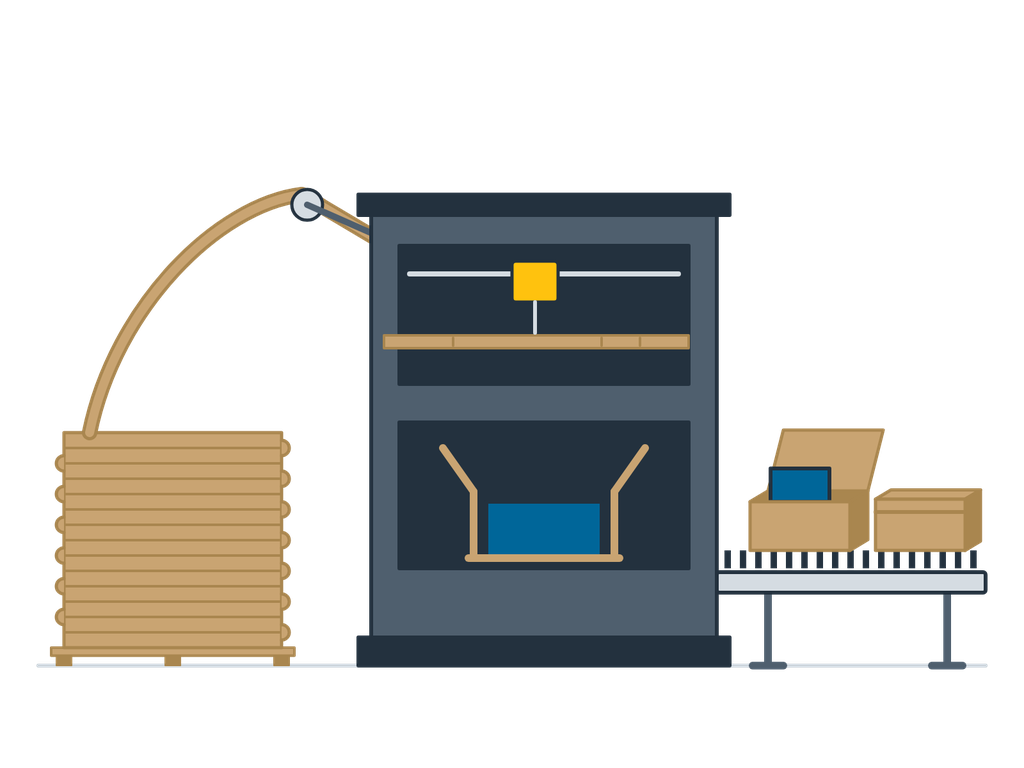
A fit-to-size box machine takes continuous fanfold corrugated board and cuts and folds a box to the scanned order's dimensions. Box height reduction works with standard cartons: it measures the highest point of the contents, cuts away the excess wall height, then folds and seals the lid. Either way the box fits the goods, so there is less void fill and lower dimensional weight and freight. The EU Packaging and Packaging Waste Regulation (PPWR) sets a limit on empty space in e-commerce and transport packaging, and this equipment is one way to meet it.
| Fit-to-size | Published model ratings about 360–1,100 boxes/h; process scope and sustained output per project |
|---|---|
| Height reduction | Published model ratings about 720–960 boxes/h; sustained output per project |
| Material | Fanfold corrugated board (fit-to-size); standard cartons (height reduction) |
| Size | Generated per order from the scan or measurement |
| Regulation | EU PPWR Article 24: a 50% empty-space limit for e-commerce, transport and grouped packaging, applying from 1 January 2030 or three years after the related implementing act, whichever is later; void fill counts as empty space; the machine itself does not guarantee compliance |
Figures are typical configuration ranges; exact specifications are set per project.