Skip to Content

Case erector and case sealer

The erector opens and bottom-seals carton blanks; the sealer tapes cases shut, and flap-folding models close the flaps too. Sold singly or as an end-of-line packing line.
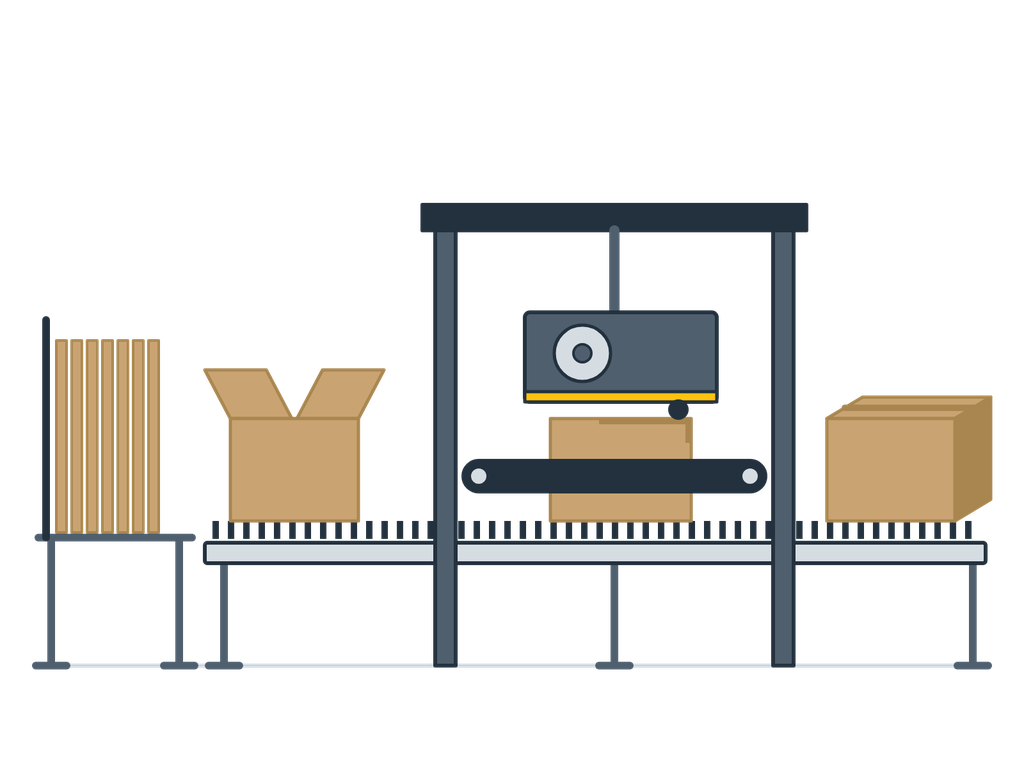
The erector opens and bottom-seals carton blanks; the sealer tapes cases shut, and flap-folding models close the flaps too. Sold singly or as an end-of-line packing line.

A case erector takes a flat carton blank from its magazine, opens it, folds the bottom flaps and seals them with tape or hot melt, then passes the case to packing. A standard case sealer tapes cases whose flaps are already closed; a flap-folding sealer closes the top flaps itself. Fixed-size sealers suit a single case size; random sealers sense each case's width and height and suit e-commerce and mixed shipping. Both are sold singly or linked with packing, weighing, labeling and palletizing into an end-of-line packing line.

Typical uses

  • Factory packing lines
  • Outbound in e-commerce and 3PL warehouses
  • Export packing for food, appliances, textiles
  • Upstream of palletizing

How to choose

  • Case sizes and changeovers: fixed-size machines for one size per batch and infrequent changes; random sealers for mixed cases
  • Cases per minute
  • Tape or hot melt
  • Whether a machine should close the top flaps: if so, choose a flap-folding sealer; overfilled, bulging cases need the packing quantity adjusted first

When it is not the right choice

  • A few hundred cases a day in many sizes: semi-automatic equipment or manual work is cheaper
  • E-commerce customers want easy opening: use tape rather than hot melt
  • Storage below 0 °C: confirm the hot-melt type

Key figures

Erecting speedAbout 5–35 cases/min
Case length (erector)Typically about 150–600 mm
Random sealer speedAbout 15–28 cases/min
Random sealer size rangeWidth about 100–660 mm, height about 90–690 mm, by model
SealingTape (2 in or 3 in) or hot melt

Figures are typical configuration ranges; exact specifications are set per project.

Options

  • Automatic flap folding
  • L-seal or H-seal taping
  • Larger blank magazine
  • Weighing, labeling, strapping and palletizing downstream
  • Tape heads and other wear parts supplied separately

Scope of supply

  • Machine, drives and control cabinet, assembled and dry-run tested before shipping
  • The equipment's own control and fleet software; interfaces to your existing WMS / ERP as the project requires
  • Drawings: general arrangement, foundation and anchor plan, electrical schematics
  • Conformity documents for the equipment and the whole line, the split of responsibilities and the acceptance criteria are set out in the contract according to the project scope
  • Spare-parts list and wear-part recommendation; a first batch can ship with the equipment
  • Factory acceptance (FAT): attend in person or follow by live video
  • Installation, commissioning and operator training can be included in the offer

What we need for an offer

  • Length, width and height of the smallest and largest cases, board flute
  • Cases per minute
  • Tape or hot melt
  • How cases are packed: by hand or by robot
  • Whether palletizing follows

Related equipment

Request an offer for this equipment