Strapping machines (carton and pallet)
PP strap is usual for cartons, PET for pallets; semi-automatic, automatic and unmanned inline machines, with top press and corner boards as options.
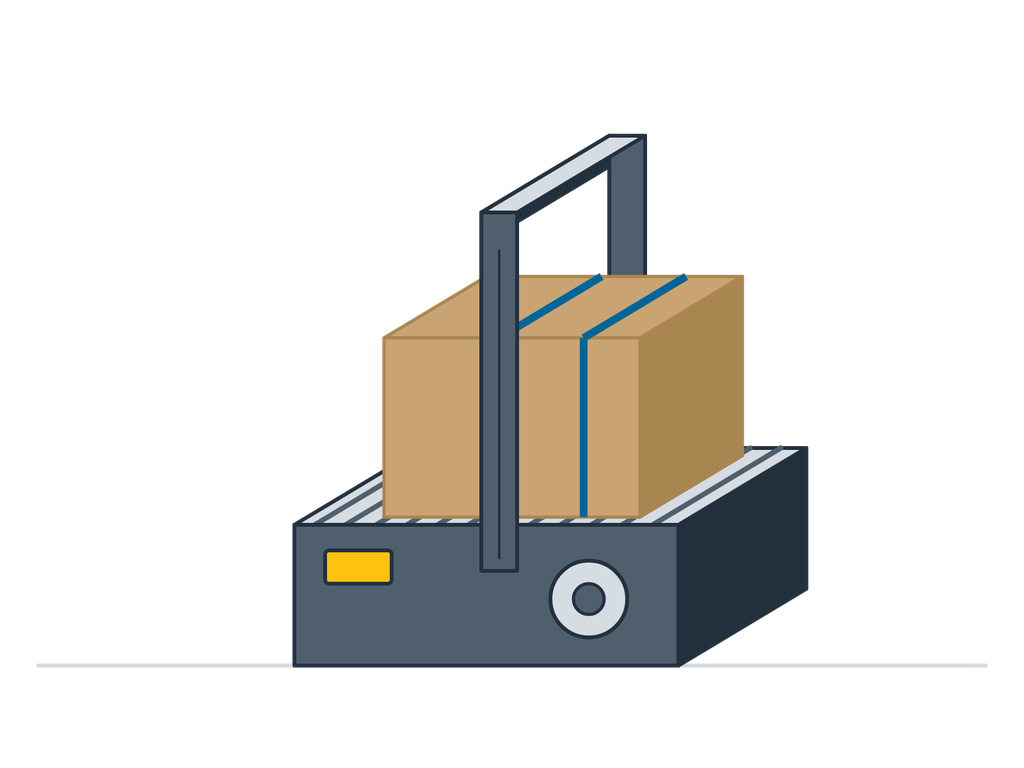
PP strap is usual for cartons, PET for pallets; semi-automatic, automatic and unmanned inline machines, with top press and corner boards as options.
PP strap is usual for cartons, PET for pallets; semi-automatic, automatic and unmanned inline machines, with top press and corner boards as options.
Strapping machines tie cartons or whole pallet loads with plastic strap. Carton strappers mostly use PP strap: semi-automatic models are threaded by hand; automatic models have an arch, so the operator pushes the carton in and it is strapped at the touch of a button, and with a conveyor plus positioning, detection and interlocks they run unmanned. Pallet strappers mostly use stronger PET strap and run inline, strapping horizontally (against sideways shifting) or vertically (tying the load to the pallet); loose or compressible loads get a top press, and corner boards stop the strap cutting into cartons.
| Carton strapping speed | Semi-automatic about 3 s per strap; automatic about 1.5–2.5 s |
|---|---|
| PP strap | About 5–15 mm wide |
| Carton arch | About 650×500 to 850×600 mm |
| Pallet strap | PET, about 9–19 mm wide |
| Pallet strap tension | About 1,100–3,200 N |
| Pallet throughput | About 60–120 pallets/h, depending on horizontal or vertical strapping, number of straps and top press |
Figures are typical configuration ranges; exact specifications are set per project.