Robotic palletising cell
One robot serving one or several lines, hundreds to over a thousand cases per hour, around the clock.
One robot serving one or several lines, hundreds to over a thousand cases per hour, around the clock.
One robot serving one or several lines, hundreds to over a thousand cases per hour, around the clock.
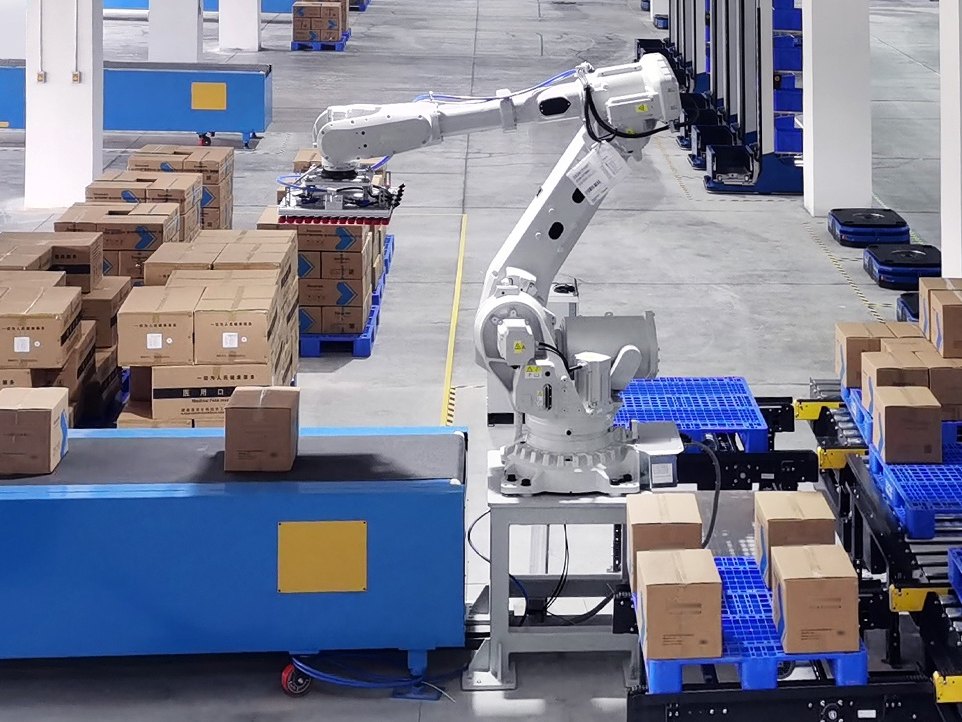
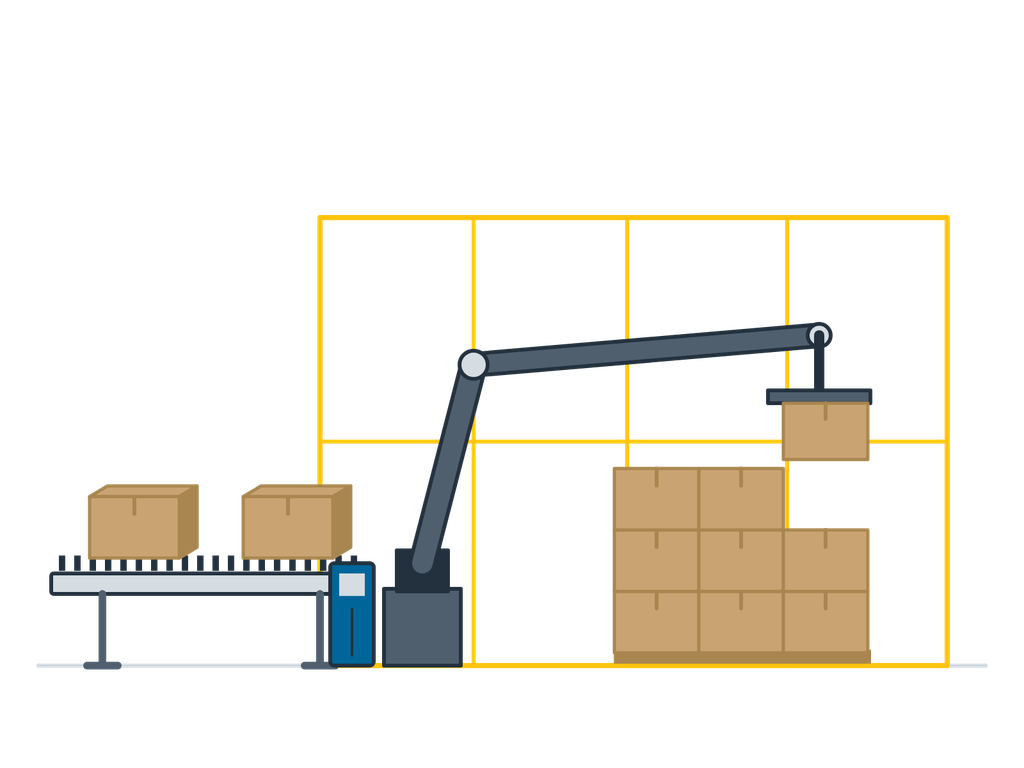
A robotic palletising cell uses a four- or six-axis robot to stack cartons, sacks or pails from the end of a production line onto pallets in a programmed pattern. One robot can serve 2–4 low-speed lines in turn, provided their combined case rate stays within the robot's cycle rate. The gripper is a clamp, vacuum or fork type to suit the product, or a hybrid. The cell includes case infeed, empty-pallet supply, full-pallet outfeed and safety fencing. Patterns are edited in software, not in the mechanics.
| Robot payload | 120–300 kg including gripper |
|---|---|
| Rate | About 400–700 cases/h picking one case at a time; 900–1,200 cases/h with multi-case or full-row picking |
| Pallet | ≤ 1,600×1,200 mm, stack height ≤ 2,200 mm |
| Products | Cartons ≤ 40 kg, sacks ≤ 50 kg, pails per project |
| Gripper | Clamp, vacuum, fork or hybrid, with automatic changeover |
| Lines | 1–4 lines per robot |
| Pallet supply | Automatic dispenser, 10–15 pallets; slip-sheet option |
| Safety | Fencing, interlocked gates and light curtains; conformity documents for the equipment and the whole line, the split of responsibilities and the acceptance criteria are set out in the contract according to the project scope |
Figures are typical configuration ranges; exact specifications are set per project.