Skip to Content

Case packers and shrink bundlers

Robotic case packing, wrap-around case packing, tray forming and sleeve shrink bundling; chosen by product shape, speed and plastic-reduction goals.
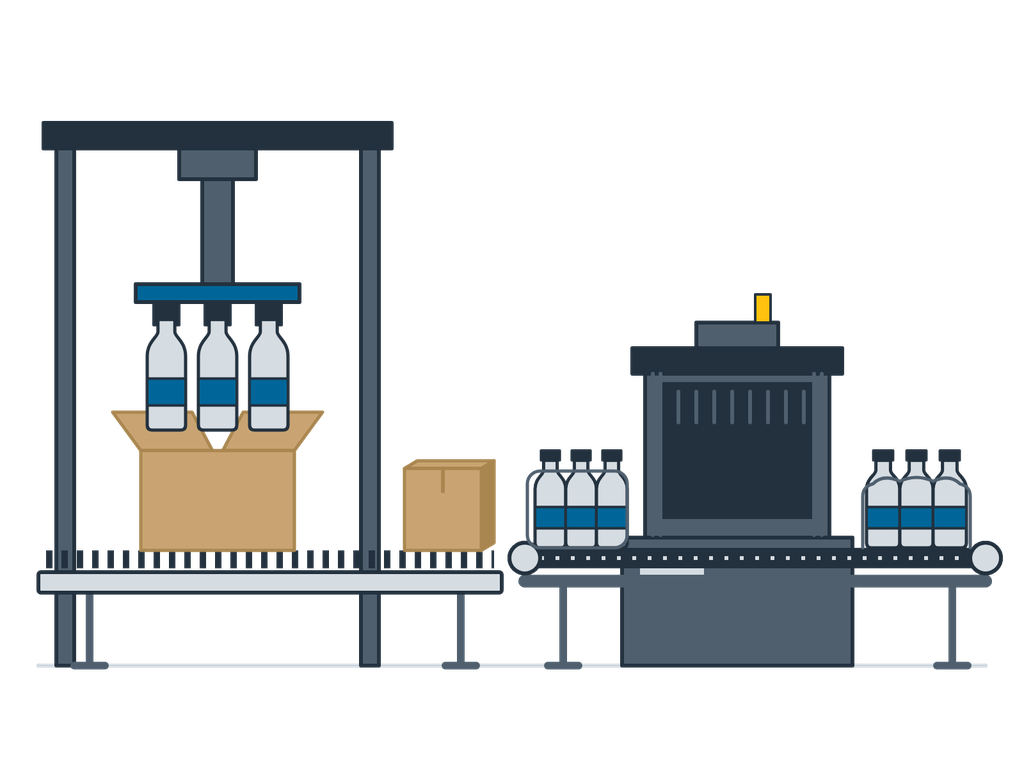
Robotic case packing, wrap-around case packing, tray forming and sleeve shrink bundling; chosen by product shape, speed and plastic-reduction goals.

Case packing and bundling turn single products into transport units at the end of filling and production lines. A robotic case packer places bottles, pouches or cartons into cases by robot, adding vision when the pattern or infeed is not fixed; a product change usually means a new gripper and programme. A wrap-around case packer wraps a flat blank around the grouped products and seals it, saving board at high speed, for regular bottles and cans. A tray former makes open trays for produce or beverage packs. A sleeve shrink wrapper wraps a group of bottles or cans in PE film and shrinks it in a tunnel into a bundle such as a six-pack.

Typical uses

  • Bundling and case packing for water, beverages and dairy
  • Case packing for food and household products
  • Tray packing for fresh produce exports
  • Robotic case packing on multi-product lines

How to choose

  • Pack format: closed cases by robot or wrap-around packer, open trays by tray former, film bundles by sleeve shrink wrapper
  • Product shape and robustness: pouches, odd shapes and fragile glass by robot pick-and-place; regular rigid bottles and cans at speed by wrap-around
  • Output and changeovers: robots suit many products and frequent changes
  • Plastic reduction and energy: shrink tunnels use a lot of power; for less plastic choose trays or wrap-around cases

When it is not the right choice

  • Customers or export markets demand no plastic: no shrink bundling; trays or wrap-around cases
  • Pouches, odd shapes or mixed e-commerce SKUs: not wrap-around or drop packing (groups dropped into the case); robotic packing or an erect-and-seal line
  • One size of rigid bottles at very high speed: several robots cost more than a wrap-around packer or fast shrink wrapper

Key figures

Wrap-around packingAbout 15–60 cases/min; the upper end per model
Tray formingAbout 8–80 trays/min (single head about 30/min); the upper end per model
Sleeve shrink bundlingSemi-automatic about 8–18 packs/min; automatic about 25–45/min; with trays up to about 65/min in published data, per model
Robotic case packingRate set by product, gripper and pattern
MaterialsCorrugated board, trays, PE shrink film

Figures are typical configuration ranges; exact specifications are set per project.

Options

  • Vision-guided picking
  • Quick-change grippers
  • Tray-and-film combination packs
  • Linked with erecting, sealing and palletizing

Scope of supply

  • Machine, drives and control cabinet, assembled and dry-run tested before shipping
  • The equipment's own control and fleet software; interfaces to your existing WMS / ERP as the project requires
  • Drawings: general arrangement, foundation and anchor plan, electrical schematics
  • Conformity documents for the equipment and the whole line, the split of responsibilities and the acceptance criteria are set out in the contract according to the project scope
  • Spare-parts list and wear-part recommendation; a first batch can ship with the equipment
  • Factory acceptance (FAT): attend in person or follow by live video
  • Installation, commissioning and operator training can be included in the offer

What we need for an offer

  • Product size, weight, packaging material and infeed orientation
  • Pattern per case or pack and target speed
  • Packaging specs: board size and flute, tray drawing, film width and thickness
  • Changeover frequency
  • Available power and local mains

Related equipment

Request an offer for this equipment