Skip to Content

Food and beverage conveyors (modular plastic belt and slat chain)

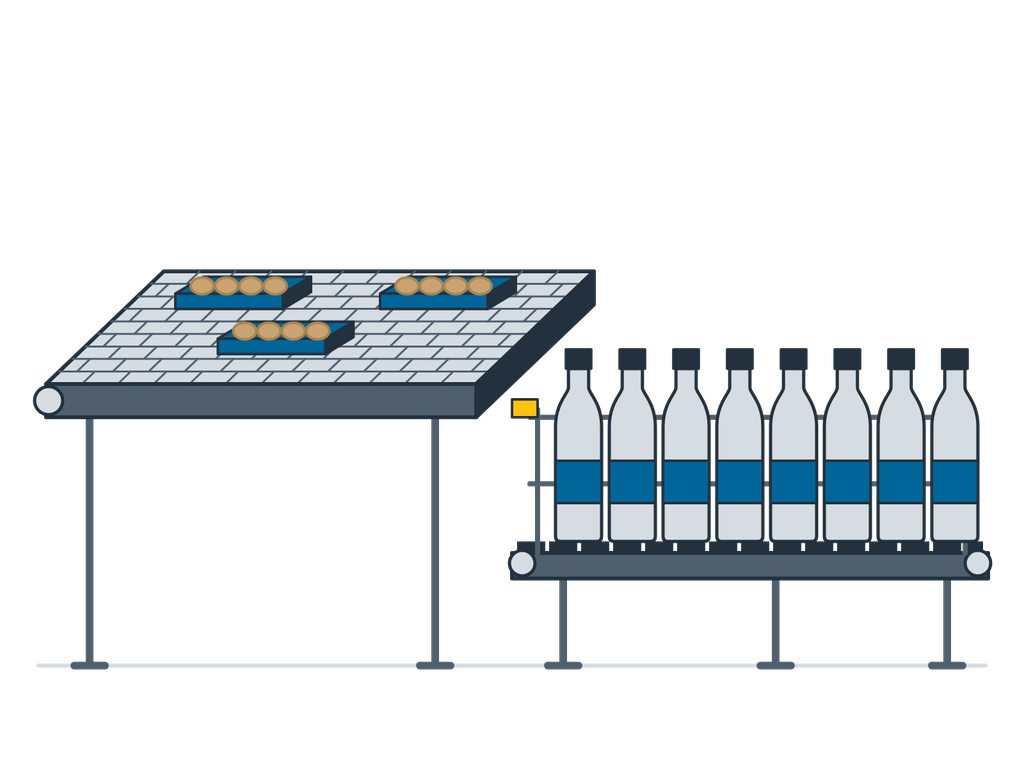
Modular plastic belts are washable, can turn and drain; flat-top slat chains carry bottles and cans in single file and accumulate them. Material chosen by product, temperature and cleaning.

Modular plastic belts are washable, can turn and drain; flat-top slat chains carry bottles and cans in single file and accumulate them. Material chosen by product, temperature and cleaning.

Conveyors on food and beverage lines must stand frequent wash-down, cope with temperature and be safe in food contact. A modular plastic belt is built from plastic modules: open areas drain and cool, damaged modules are replaced individually, and the belt can turn. A flat-top slat chain conveyor uses plastic or stainless chain and carries bottles, cans and cartons in single file and accumulates them; it is the workhorse of filling and packing lines. Belt and chain materials are chosen by product, temperature and cleaning chemicals, and food-contact grades come with the compliance documents for the selected grade.

Typical uses

  • Filling and packing lines for beverages, dairy and water
  • Processing in meat, poultry, bakery and snacks
  • Freezing, cooling and draining sections
  • Bottle handling in household and cosmetic products

How to choose

  • What it carries: single-file bottles and cans with accumulation on slat chain; bagged, loose and wide products on modular belt
  • Temperature and material: POM belt about −40 to 100 °C, PP belt about 0 to 90 °C; chain in plastic or stainless
  • Draining, cooling and washing: choose the open area; check water temperature and chemicals
  • Curve radius, accumulation back pressure, dry or wet running

When it is not the right choice

  • Baking, frying and other processes above 100 °C: no plastic belts; use stainless wire mesh belts
  • Ordinary dry cartons in a warehouse: PVC belt or roller conveyors cost far less

Key figures

Modular belt pitchCommonly 25.4 mm and 50.8 mm
Belt material and temperaturePOM about −40 to 100 °C; PP about 0 to 90 °C
Chain widthCommonly 82.5 mm and 114.3 mm
Stainless chain curve radiusMinimum about 200–500 mm, by chain type
Food contactFood-contact documents per selected material (e.g. EU 10/2011); for POM copolymer, US FDA 21 CFR 177.2470

Figures are typical configuration ranges; exact specifications are set per project.

Options

  • Stainless frames and hygienic design
  • Stainless wire mesh belts for hot processes
  • Flights, side guards and radius belts
  • Lubricated or dry-running chains
  • Drum-motor drives (wash-down type)

Scope of supply

  • Machine, drives and control cabinet, assembled and dry-run tested before shipping
  • The equipment's own control and fleet software; interfaces to your existing WMS / ERP as the project requires
  • Drawings: general arrangement, foundation and anchor plan, electrical schematics
  • Conformity documents for the equipment and the whole line, the split of responsibilities and the acceptance criteria are set out in the contract according to the project scope
  • Spare-parts list and wear-part recommendation; a first batch can ship with the equipment
  • Factory acceptance (FAT): attend in person or follow by live video
  • Installation, commissioning and operator training can be included in the offer

What we need for an offer

  • Product type (bottles, cans, pouches, cartons or unpacked food), size, weight and base
  • Operating temperature (frozen, ambient, hot fill), cleaning method and chemicals
  • Speed, hourly output, accumulation or drainage needs
  • Line layout (length, curves, inclines) and local mains
  • Food-contact documents and protection class required

Related equipment

Request an offer for this equipment