Print-and-apply labeler
Prints and applies labels inline: top, side and corner-wrap on cartons, GS1 pallet labels on pallets, shipping labels on parcels.
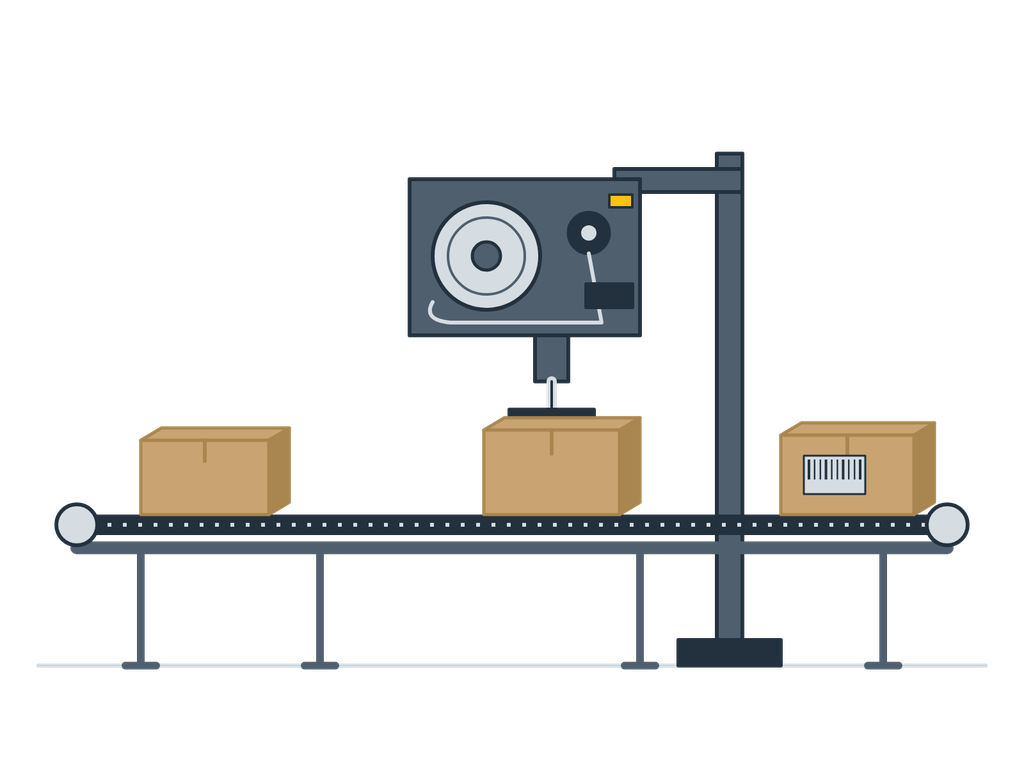
Prints and applies labels inline: top, side and corner-wrap on cartons, GS1 pallet labels on pallets, shipping labels on parcels.
Prints and applies labels inline: top, side and corner-wrap on cartons, GS1 pallet labels on pallets, shipping labels on parcels.
A print-and-apply labeler takes data from the ERP, WMS or host system, prints the label in real time and applies it to the carton or pallet by air blow, tamp or swing arm. A corner-wrap label spans two faces so it reads from the side and the front. A pallet labeler applies GS1 logistics labels with the SSCC code on two adjacent sides as GS1 recommends (or as the customer specifies); European retailers widely ask for them at receiving. It can be added to an existing line or combined with weighing, scanning, palletizing and wrapping into an end-of-line system.
| Carton side labeling | Published model examples: about 40 labels/min |
|---|---|
| Top labeling | Published model examples: about 80 items/min |
| Height range | Published model examples: carton heights from about 25 to 914 mm |
| Pallet labeling | Published model examples: about 3 pallets/min on two sides, about 10/min on one side |
| Pallet label | GS1-128 barcode with Application Identifier (00) for the SSCC; GS1 recommends the same label on two adjacent sides, with the barcode bottom about 400–800 mm above the pallet base (low loads excepted); the SSCC is built from the customer's GS1 company prefix |
| Application | Air blow, tamp, swing arm, corner wrap |
| Placement accuracy | Published model example: about ±1 mm static; past projects accepted at ±3 mm |
Figures are typical configuration ranges; exact specifications are set per project.