Telescopic forks and load-handling devices
The unit that puts pallets and totes into rack positions on cranes and shuttles; single or double deep, supplied separately for new machines and retrofits.
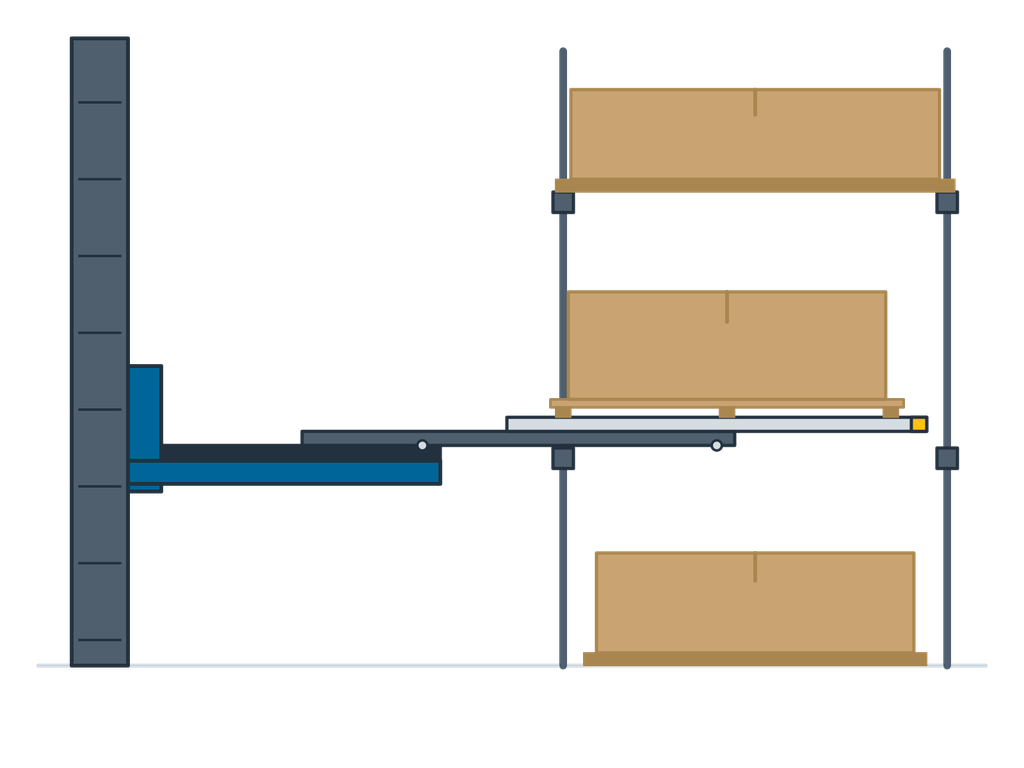
The unit that puts pallets and totes into rack positions on cranes and shuttles; single or double deep, supplied separately for new machines and retrofits.
The unit that puts pallets and totes into rack positions on cranes and shuttles; single or double deep, supplied separately for new machines and retrofits.
A telescopic fork sits on the carriage of a stacker crane or shuttle and extends in two or three stages to put a pallet or tote into a rack position and take it out. Pallet forks have two tines and are built single or double deep, driven by rack and pinion or by chain. For totes the load-handling device can be a telescopic fork, clamp, hook or belt, chosen by whether you store totes or cartons and whether they have handles. Forks are supplied on their own for new machines, retrofits and replacement.
| Pallet fork load | Typically 1–1.5 t class; manufacturer ranges cover about 0.8–4.5 t, per project |
|---|---|
| Pallet position depth | Single deep about 1,000–1,300 mm; double deep available |
| Pallet fork stroke | Single deep about 1,200–2,200 mm; double deep up to about 2,700 mm |
| Fork speed | About 30 m/min loaded, about 50–60 m/min empty |
| Drive | Rack and pinion or chain; two or three stages |
| Tote handling | Up to about 50 kg per tote, totes about 300×400 to 600×400 mm |
| Tote depth | Single or double deep, 1–2 totes per cycle |
| Tote device types | Telescopic fork, clamp, hook, belt |
Figures are typical configuration ranges; exact specifications are set per project.