Skip to Content

Cold-store AS/RS solution

Stacker cranes, four-way shuttles or radio shuttles selected for each temperature zone and built into a complete system for the cold store: fewer people in the cold, more storage upwards.
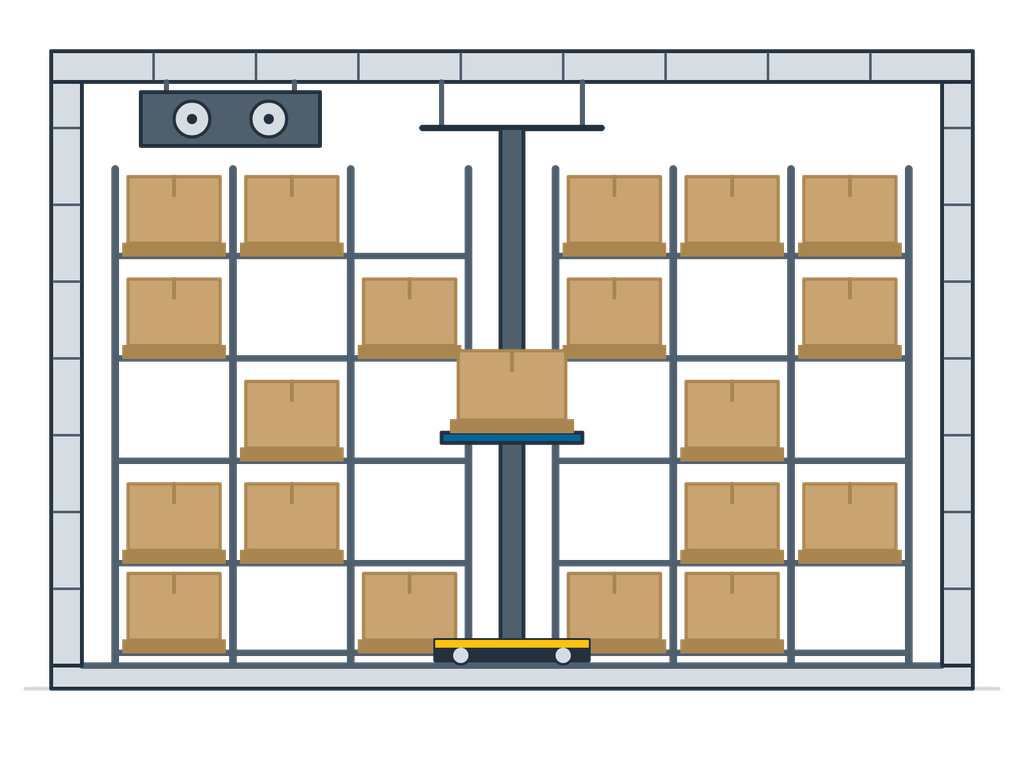
Stacker cranes, four-way shuttles or radio shuttles selected for each temperature zone and built into a complete system for the cold store: fewer people in the cold, more storage upwards.

A cold-store AS/RS is not one machine but storage equipment built as a complete system for steady service at low temperature. In a freezer, people can work only limited time and every cubic metre is expensive to cool, so it pays even more to build upwards and keep people out. The equipment uses low-temperature lubricants, cables and batteries; control cabinets are heated or placed in an ambient zone; and the in/out points are designed against condensation and frost. Depending on throughput and budget, the store uses stacker cranes, four-way shuttles, or semi-automated radio shuttles that still need forklifts.

Typical uses

  • Frozen food, meat, poultry, seafood, ice cream
  • Dairy and fresh-produce chilled stores
  • Export cold-chain distribution
  • Pharmaceutical cold chain (temperature requirements per project)

How to choose

  • Temperature zones: freezer, chilled or several
  • Peak movements, SKU profile, first-in first-out or last-in first-out, and required availability decide between cranes, four-way shuttles and radio shuttles
  • Temperature difference at the doors and how they open, which decides anti-condensation measures
  • New building or retrofit of an existing cold store

When it is not the right choice

  • Standard ambient models must not go straight into a freezer: equipment, batteries and lubricants need low-temperature ratings
  • Very low daily movements and small capacity: do the numbers; cold-store racking with forklifts may cost less

Key figures

TemperatureFreezer equipment typically runs continuously down to about −25 to −30 °C; chilled 0–4 °C class
Stacker cranesLow-temperature type about −30 to +40 °C
Radio shuttlesLow-temperature type about −25 to −30 °C
Cold-store AGVOperates at about −25 °C with self-heating batteries
ControlsHeated cabinets, or cabinets in an ambient zone
BuildingInsulated envelope; rack-clad possible

Figures are typical configuration ranges; exact specifications are set per project.

Options

  • Insulated rack-clad building
  • Low-temperature stacker cranes, four-way shuttles or radio shuttles
  • Low-temperature batteries and heating
  • High-speed doors, air curtains and buffer rooms
  • Temperature and equipment monitoring

Scope of supply

  • Machine, drives and control cabinet, assembled and dry-run tested before shipping
  • The equipment's own control and fleet software; interfaces to your existing WMS / ERP as the project requires
  • Drawings: general arrangement, foundation and anchor plan, electrical schematics
  • Conformity documents for the equipment and the whole line, the split of responsibilities and the acceptance criteria are set out in the contract according to the project scope
  • Spare-parts list and wear-part recommendation; a first batch can ship with the equipment
  • Factory acceptance (FAT): attend in person or follow by live video
  • Installation, commissioning and operator training can be included in the offer

What we need for an offer

  • Temperature zones and required capacity
  • Pallet size and weight
  • Daily and peak-hour movements
  • Site and height; new build or retrofit
  • Product temperature at intake

Related equipment

Request an offer for this equipment