Chemicals
Chemical plants ship bags, drums and cartons on pallets that are often heavy, and some areas may be classified as hazardous. These are the usual tasks around production and in the warehouse and the equipment to look at; which areas are hazardous, and what that requires of the equipment, is set by your safety assessment.
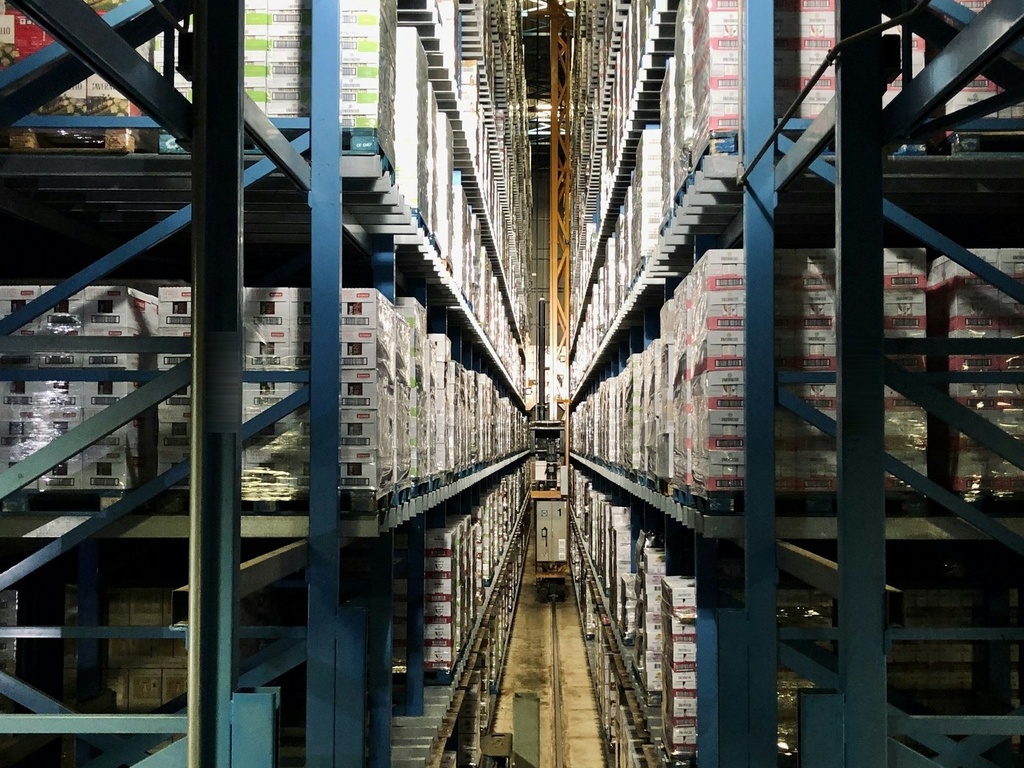
Typical tasks
- Palletising bags, drums and cartons at the end of the line
- Storing raw materials and releasing them to production by batch
- Storing heavy finished-goods pallets
- Loading trucks at the shipping dock
What to send us: Packaging (bags, drums, cartons) and weights, pallet sizes, pallets in and out per day, the hazardous-area classification drawing if there is one, and a site plan.
Common questions
Can this equipment be used in hazardous areas?
Equipment in a hazardous area must carry the certification that area requires; whether a certified model can be supplied for your zoning is confirmed machine by machine per project.
Can bagged products be palletised automatically?
The robotic palletising cell lists cartons up to 40 kg and bags up to 50 kg on its product page; drums are assessed per project. Bag material, fill and stacking pattern are checked with samples.
How are storage conditions for hazardous goods set?
Storage conditions and separation for hazardous goods are set by the regulations that apply to your site and confirmed by you; the equipment layout follows them, assessed per project.
Other industries
- Parcel, e-commerce and retail distribution
- Food, beverage and FMCG
- Plastics and home appliance manufacturing
- New energy: batteries and solar panels
- Cold chain and cold storage
- Pharmaceutical distribution and warehousing
- Automotive parts
- Apparel and footwear
- Third-party logistics (3PL)
- Spare parts and MRO distribution
- Common tasks across industries
Not sure where your project fits?
Send us a layout, your volumes and what moves through the site. We suggest the modules and calculate the throughput.