Skip to Content

Robotic depalletising cell

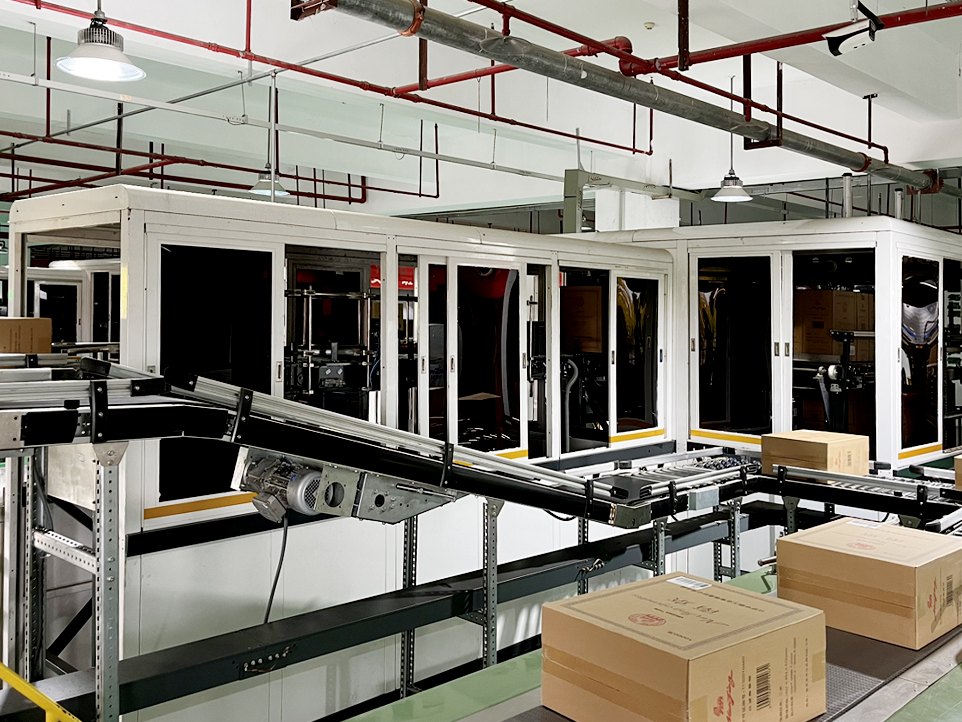
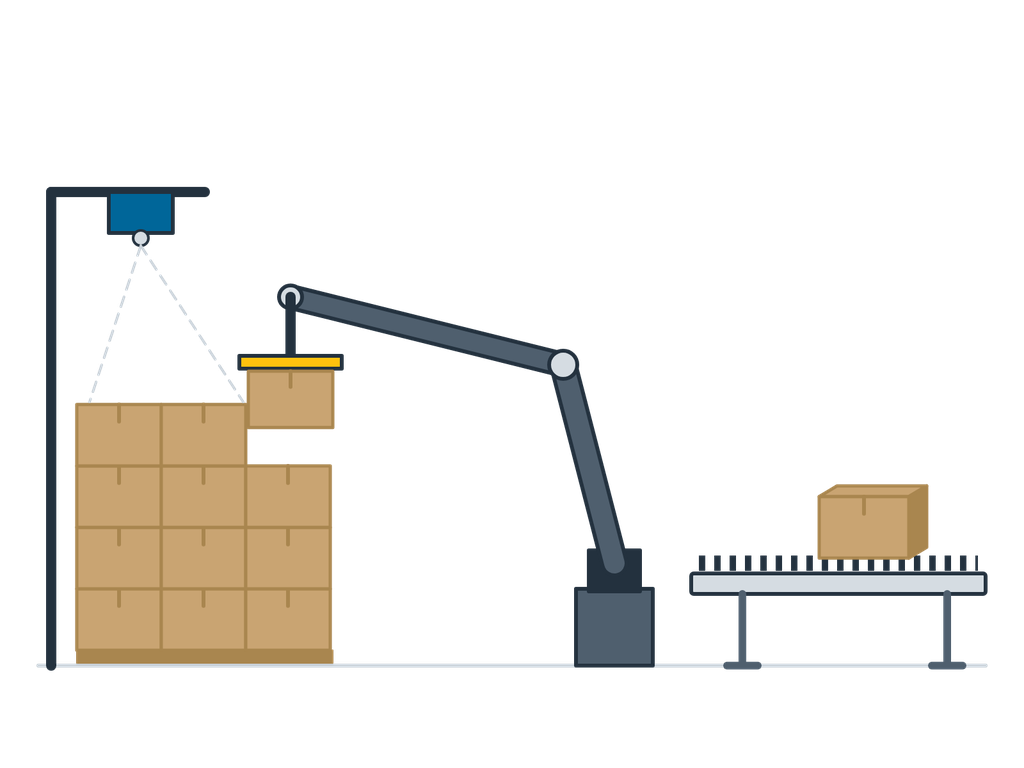
Pallets in, single cases out: 3D vision recognises mixed stacks with no pattern taught in advance.

Pallets in, single cases out: 3D vision recognises mixed stacks with no pattern taught in advance.

A robotic depalletising cell lifts cases one by one from inbound pallets onto a conveyor or into totes for put-away, sorting or line feeding. 3D vision looks down at each layer and identifies position, size and orientation, so pallets with several case types are handled. Empty pallets can be recovered automatically. Stretch wrap, strapping and badly collapsed pallets need separate handling.

Typical uses

  • Inbound depalletising ahead of an AS/RS
  • Mixed-pallet depalletising in FMCG warehouses
  • Raw-material feeding of production lines
  • Automatic sorter induction

Key figures

RateSingle case type, case by case: typically about 500–900 cases/h; mixed cases about 400–700 cases/h
Case weight≤ 30 kg (vacuum) / ≤ 50 kg (clamp)
Case size200–800 mm
Stack height≤ 2,200 mm
Vision3D camera recognises mixed cases; visible gaps between cases are needed. No pre-defined pallet patterns; new case types are confirmed with samples
GripperZoned vacuum or clamp
PalletsEuro / industrial, automatic recovery

Figures are typical configuration ranges; exact specifications are set per project.

Options

  • Scanning and weighing after depalletising
  • Slip-sheet and pallet-film handling
  • Two pallet positions for continuous operation
  • Link to conveyors and AS/RS inbound
  • New-generation 3D cameras that recognise reflective goods and dark plastic totes (confirmed with samples)

Scope of supply

  • Machine, drives and control cabinet, assembled and dry-run tested before shipping
  • The equipment's own control and fleet software; interfaces to your existing WMS / ERP as the project requires
  • Drawings: general arrangement, foundation and anchor plan, electrical schematics
  • Conformity documents for the equipment and the whole line, the split of responsibilities and the acceptance criteria are set out in the contract according to the project scope
  • Spare-parts list and wear-part recommendation; a first batch can ship with the equipment
  • Factory acceptance (FAT): attend in person or follow by live video
  • Installation, commissioning and operator training can be included in the offer

What we need for an offer

  • Case list and pallet condition (mixed or not; stretch wrap, strapping or slip-sheets)
  • Cases per hour
  • Downstream: conveyor or totes
  • Floor plan

Request an offer for this equipment