Mixed-case palletising system
Dozens of case sizes built into one store pallet: software plans the stack, 3D vision watches every case.
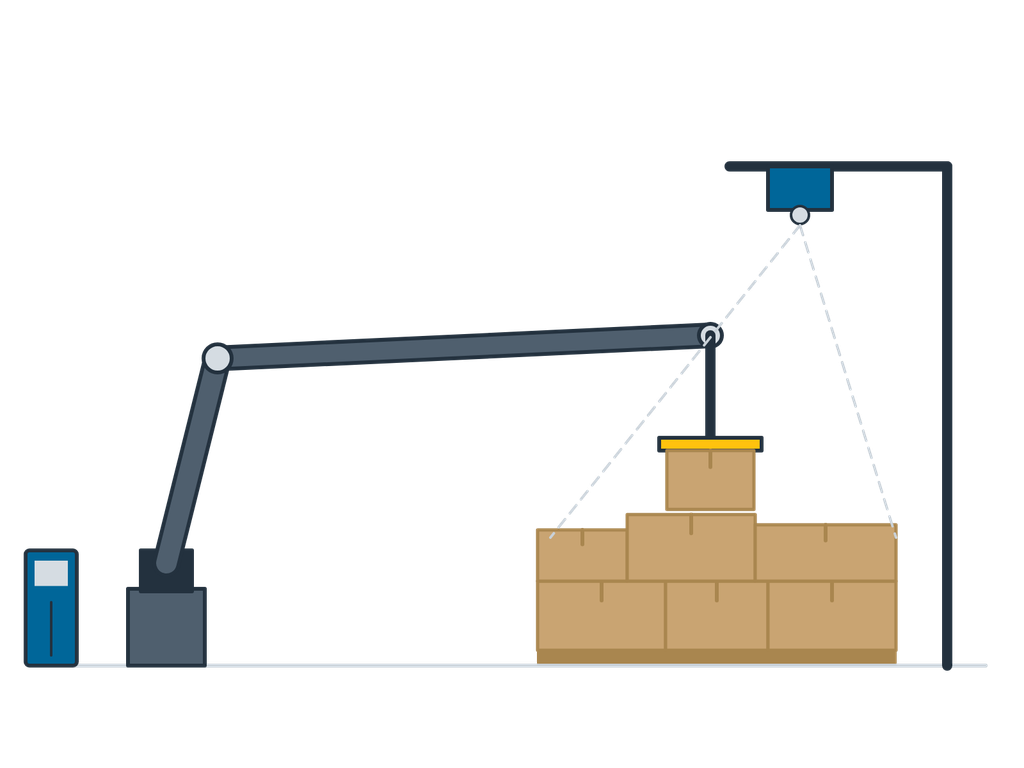
Dozens of case sizes built into one store pallet: software plans the stack, 3D vision watches every case.
Dozens of case sizes built into one store pallet: software plans the stack, 3D vision watches every case.
Mixed-case palletising stacks cases of different sizes and weights onto one pallet per order, for store-level outbound in distribution centres. Software first computes a stable pattern from case dimensions, weights and crushability; the conveyor sequences the cases to the robot; 3D vision verifies the position and orientation of each one. Stores receive pallets built in shelf order, which shortens unloading.
| Rate | 300–600 cases/h per cell |
|---|---|
| Case variety | Typically dozens to over a hundred case types; length about 200–600 mm, width about 150–400 mm, height about 100–400 mm; anything outside this is confirmed separately |
| Case weight | ≤ 30 kg |
| Carrier | 1200×800 or 1200×1000 pallets, stack height ≤ 1,800 mm including pallet |
| Pattern software | Optimised for stability and store shelf sequence |
| Vision | 3D camera verifies each case placement |
| Upstream | Cases released in stacking-pattern sequence upstream (shuttle system or sequencing buffer) |
Figures are typical configuration ranges; exact specifications are set per project.