Cross-belt sorter
The workhorse of parcel and e-commerce hubs: 6,000 to 25,000 items per hour, hundreds of destinations.
The workhorse of parcel and e-commerce hubs: 6,000 to 25,000 items per hour, hundreds of destinations.
The workhorse of parcel and e-commerce hubs: 6,000 to 25,000 items per hour, hundreds of destinations.
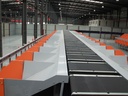
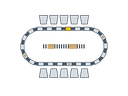
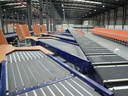
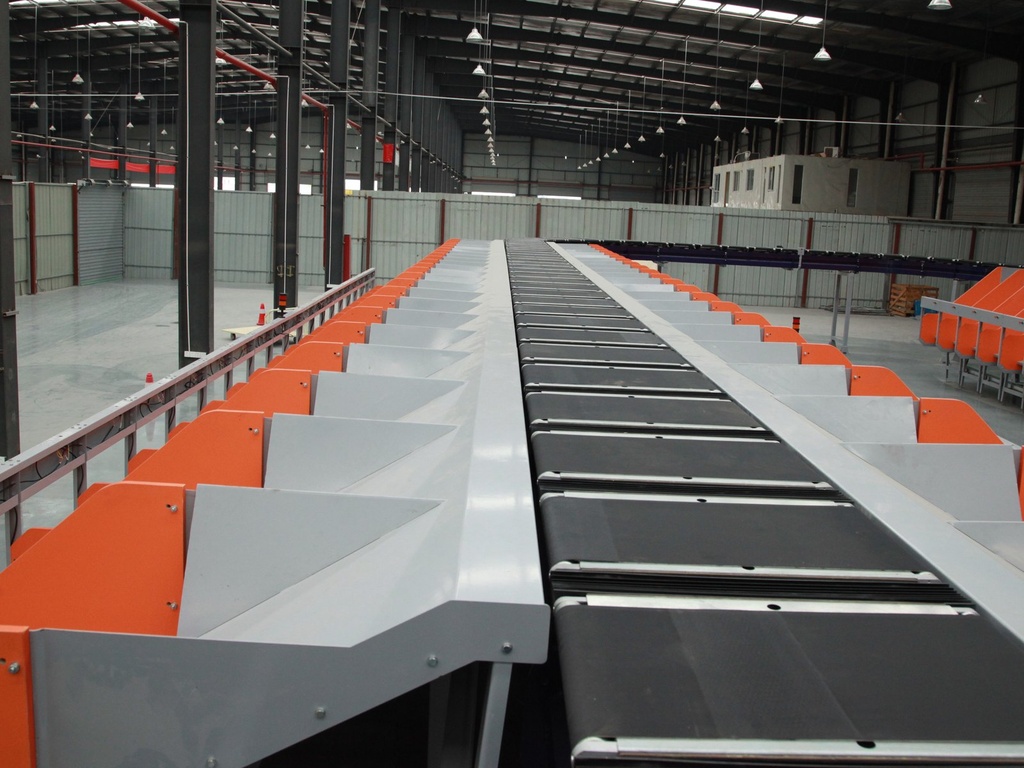
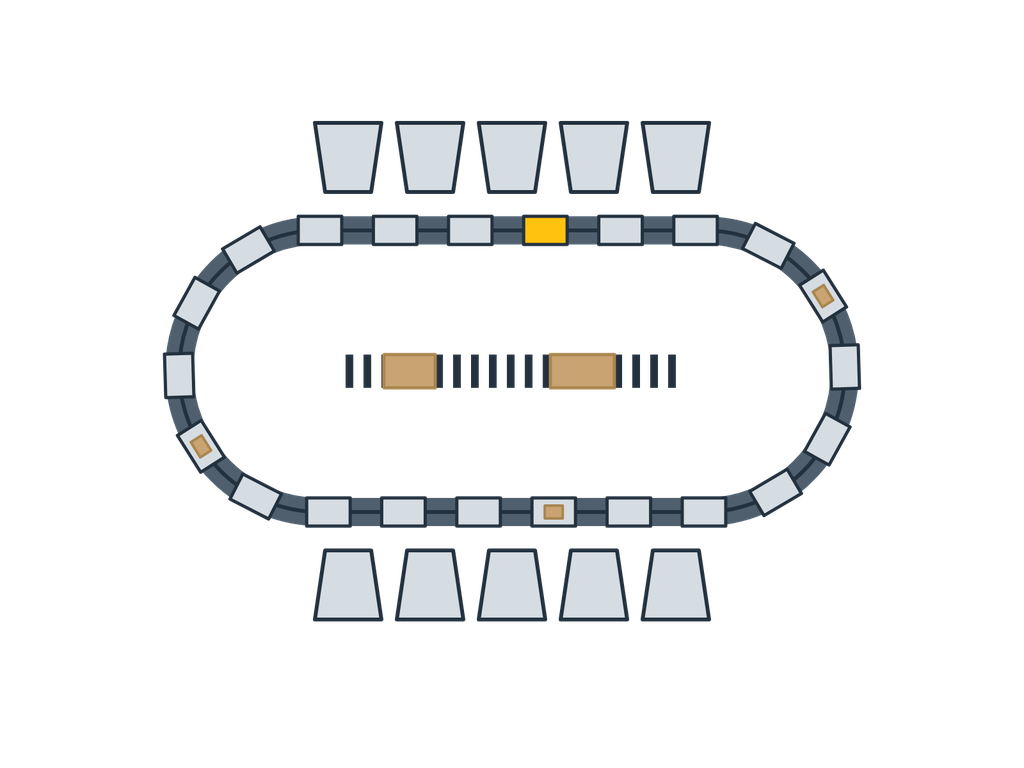
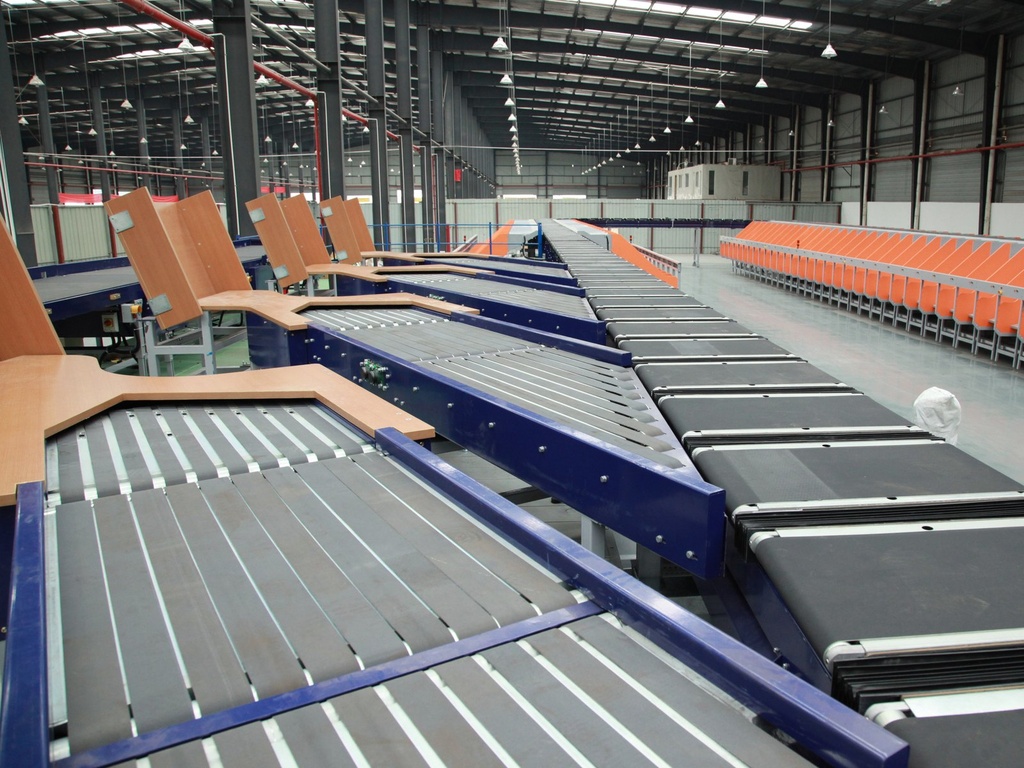
A cross-belt sorter is a loop of carriers, each with a short transverse belt that starts when the carrier reaches the destination chute and ejects the parcel. Polybags, small and flat items are its strength; round items and very soft bags need a test run. It scales to hundreds of destinations, which makes it the standard choice for parcel hubs and large e-commerce warehouses. Loop layouts suit high volumes; linear layouts suit long, narrow buildings. Induction can be manual or automatic with six-side scanning.
| Throughput | Single-level loop: typically 8,000–15,000 items/h at 600 mm pitch, 15,000–25,000 items/h on small-item lines at 400–500 mm pitch. Linear layouts typically 4,000–10,000 items/h. All figures assume induction keeps up |
|---|---|
| Parcel size | Min 100×100×5 mm (thinner document envelopes need a test run), max 800×600×600 mm |
| Parcel weight | 0.05–30 kg (heavy-duty version ≤ 50 kg, at lower speed and larger pitch) |
| Speed | 1.5–3.0 m/s |
| Carrier pitch | 400 / 500 / 600 / 800 / 1,000 mm, single or double carriers. Above 20,000 items/h, 400–500 mm pitch is required |
| Destinations | 50–500+, chutes can be stacked |
| Layout | Loop, linear or multi-level |
| Induction | Manual induction about 1,000–1,500 items/h per station; automatic induction about 1,500–4,000 items/h per unit |
| Scanning | Top or six-side dynamic scanning, 1D and 2D codes |
Figures are typical configuration ranges; exact specifications are set per project.